Loading...
Cerritos clay soils move with the seasons, and a slab that ignores that will crack within a few years. We build reinforced slab foundations with the soil prep, drainage design, and permit management that Southern California ground actually demands.
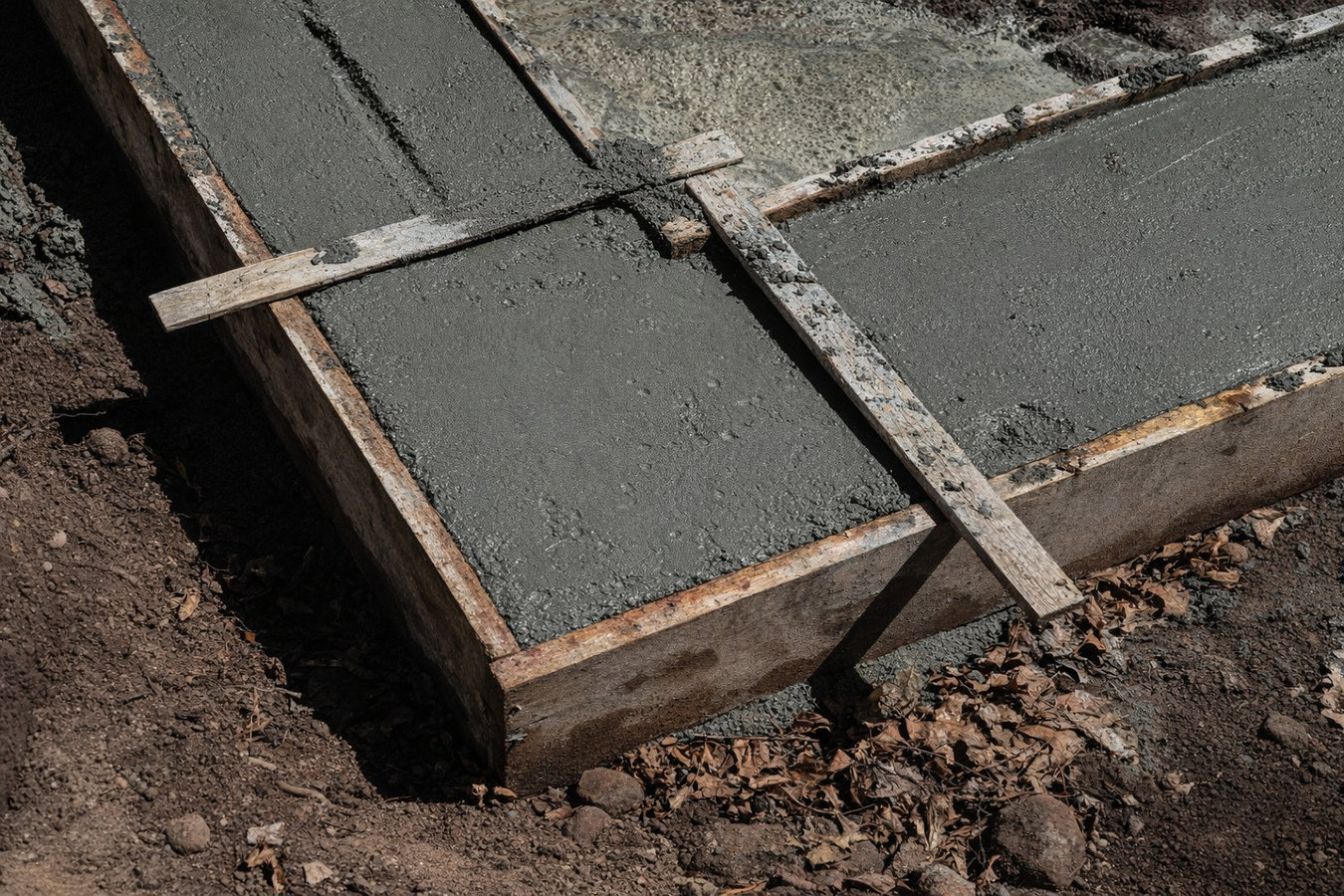
Slab foundation building in Cerritos means grading and compacting the soil, laying a gravel drainage bed and moisture barrier, placing steel reinforcement inside wooden forms, and pouring ready-mix concrete - most standard residential slabs take one to two weeks of active work from site prep through the pour, with the full timeline including permits running four to six weeks.
For most homeowners in Cerritos, this project comes up when they are building a new ADU, adding a room, or replacing a slab that has cracked and settled after decades of clay soil movement. The city was developed mostly in the 1960s and 1970s, and original slabs from that era were poured without the reinforcement and drainage standards required today - which is why so many are now failing.
If your project requires a full foundation installation with raised walls or deeper footings beyond a standard slab - common for hillside lots or larger commercial structures - we handle that scope as well.
Cracks that angle out from the corners of doors or windows in your interior drywall or exterior stucco often point to uneven movement in the foundation below. In Cerritos, where clay soils shift with seasonal moisture changes, this kind of cracking is worth taking seriously rather than patching and ignoring. A concrete contractor can assess whether the movement is cosmetic or structural.
When a slab settles unevenly - even by a fraction of an inch - the door and window frames above it can rack slightly out of square. If doors that used to swing freely now drag on the floor or latch with difficulty, and you have not had any recent plumbing leaks or obvious cause, the foundation is worth inspecting. This symptom is especially common in Cerritos homes built in the 1960s and 1970s.
If water consistently collects against the side of your home after rain or when you run your sprinklers, that moisture is working against your foundation over time. In Cerritos, where many homes have mature landscaping and irrigation systems close to the house, this is a common and underappreciated risk. A contractor can assess whether the drainage around your slab needs to be corrected before it causes more serious damage.
If you are adding a room, a garage conversion, or a separate accessory dwelling unit to your Cerritos property, you will almost certainly need a new slab poured for the addition's footprint. Cerritos has seen a significant increase in ADU construction in recent years, and each new structure needs its own properly permitted foundation - you cannot simply extend an existing slab without engineering review.
We handle the full scope - permit application with the City of Cerritos, excavation and grading, soil compaction, gravel drainage bed, moisture barrier installation, steel reinforcement placement, the pre-pour city inspection, the concrete pour, finishing, and the curing period management. Every slab we build is designed to handle the specific soil conditions on your lot. We do not use a single spec for every job, because Cerritos lots vary in drainage, slope, and proximity to existing structures.
Homeowners who are pairing a new slab with concrete footings for a load-bearing wall or post - common for ADUs and patio covers - can handle both scopes under one project and one permit process. Combining the work keeps the construction sequence logical and avoids scheduling gaps between trades.
The most common choice for single-family homes, room additions, and ADUs on typical Cerritos lots - reinforced slab on a compacted gravel base with a moisture barrier.
A slab with a deeper, heavier perimeter that carries wall loads - required for most load-bearing walls in California's seismic zone and common for new home construction.
Purpose-built for detached backyard units, sized to the ADU footprint and designed to meet Cerritos and California ADU permit requirements from the start.
Reinforced slab designed for vehicle loads, with a slight slope toward the garage door opening for drainage - a different spec than a living-space slab.
Cerritos sits in the Los Angeles Basin on soils with a significant clay content. Clay is what geotechnical engineers call expansive - it swells when it absorbs moisture and shrinks when it dries out. That cycle repeats every rainy season and every dry summer. A slab poured without a proper drainage plan and adequately compacted base absorbs that stress until it cracks, settles, or pulls away from the walls above it. The American Concrete Institute identifies proper site preparation as the most consequential variable in slab performance - and in Cerritos, that means accounting for clay movement on every pour, not just on difficult lots.
Beyond soil conditions, Cerritos is located within a mapped seismic hazard zone, and California's building code requires that foundations in this area be designed and reinforced to handle ground movement - which means more steel and deeper perimeter footings than you would see in other parts of the country. We work with homeowners throughout Downey and Norwalk, where the soil conditions and permit requirements are similar to Cerritos - so the approach we bring to every foundation job here is calibrated to this specific region, not a generic national standard.
We respond within 1 business day to schedule a free on-site visit. Seeing your lot in person - its grade, soil conditions, drainage, and equipment access - is the only way to give you a reliable written quote.
We assess soil conditions, measure the footprint, and walk through any site prep needs with you. Within a day or two you receive a written estimate covering excavation, materials, labor, and permit fees - no surprise line items after the fact.
We file the building permit application with the City of Cerritos on your behalf. Permit processing for a straightforward residential slab typically takes one to three weeks. Your start date is confirmed once the permit is approved and in hand.
The crew grades and compacts the soil, lays the gravel drainage bed, sets the moisture barrier and steel reinforcement, and schedules the pre-pour city inspection. After the pour, the concrete cures for at least a week before framing begins, and a final city inspection closes out the permit - documentation you keep with your home records.
Free on-site estimate. Written quote with permit fees included. We handle the city application for you.
We handle the City of Cerritos Building and Safety Division permit application from submission through final inspection sign-off. The permit creates an official record that your foundation was built to California's seismic and structural requirements - which matters when you sell your home or file an insurance claim.
Cerritos sits on expansive clay soils that swell when wet and shrink when dry. We compact the base, add a gravel drainage layer, and install a moisture barrier on every slab we build - the three steps that protect your foundation from the seasonal soil movement that cracks improperly prepped slabs within a few years.
Every slab we build includes steel reinforcing bars or welded wire mesh embedded inside the forms before the pour. Reinforcement gives the slab the tensile strength to flex slightly with soil movement without cracking. It is standard practice for us, not an upgrade you need to ask about.
Cerritos summers regularly exceed 90 degrees, and concrete poured without precautions in that heat can crack before it fully cures. We schedule pours for early morning in warm months and use curing compounds or damp burlap to slow the drying process - because a slab that looks fine on day one but cracks by summer's end is not a slab you should have paid for.
Every foundation we build in Cerritos is fully permitted and passes the pre-pour city inspection before a single yard of concrete is placed. You can verify any California contractor's license status at any time through the California Contractors State License Board - a licensed contractor is required to carry the insurance that protects you if anything goes wrong on your property.
Need a full foundation system for a larger structure or complex lot? Our foundation installation service covers raised, deep, and custom foundation types beyond a standard slab.
Learn MoreConcrete footings go in first and carry the load from your walls down to stable ground - the critical step that happens before any slab is poured.
Learn MorePermit slots fill up before the busy season - reach out now and lock in your project date before the queue grows.