Loading...
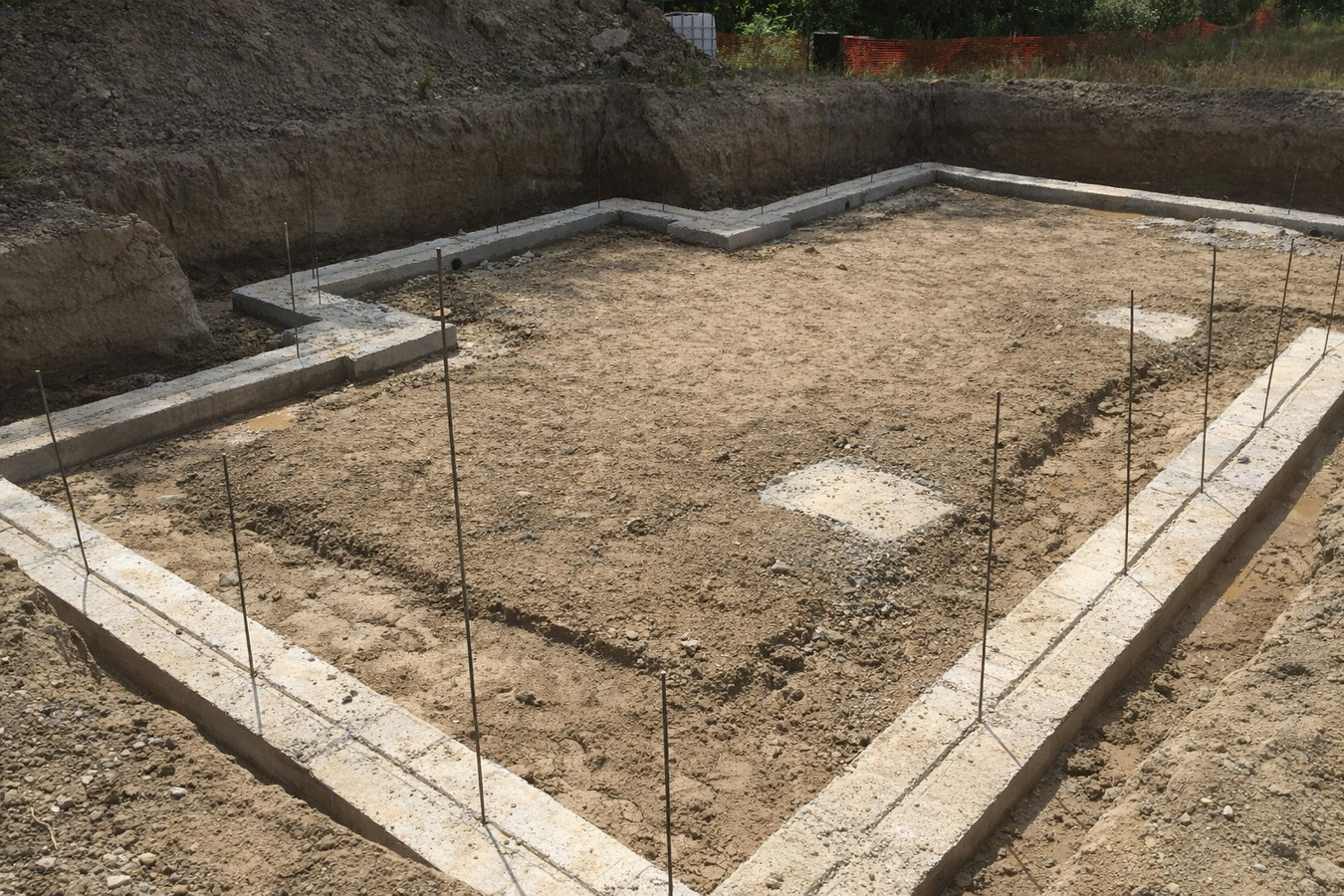
A structure is only as solid as what it sits on. We pour concrete footings in Cerritos for additions, retaining walls, pergolas, and fences - to city code, with permits pulled and inspections passed before any framing starts.
Concrete footings in Cerritos involve excavating below grade to the city-required depth, forming the footing, placing steel reinforcement, pouring concrete, curing, and passing a city inspection before any structure is framed on top - most residential footing projects are dug and poured in one to two days, but permit processing and inspections add two to four weeks to the overall timeline.
Most homeowners asking about footings are in the early stages of a project - a room addition, a covered patio, a retaining wall, or a fence. Footings are rarely the main event, but they determine whether every other trade on the project has a stable platform to work from. An underbuilt footing in Cerritos clay soil does not fail immediately - it shifts gradually over seasons and shows up later as sticking doors, diagonal cracks, and structures that no longer sit plumb.
For projects that need more than individual footings, our foundation installation service handles complete below-grade concrete systems for room additions and accessory dwelling units. If you are not sure whether your project needs individual footings or a full foundation, we will tell you during the site visit.
Diagonal cracks running from the corners of window and door openings are a classic sign that the structure has moved unevenly. This usually means a footing or foundation has shifted or settled below grade. The crack is the symptom - the cause is underground and needs to be assessed by a contractor who can look at the soil and the footing condition.
When a door that used to close cleanly starts sticking or a window suddenly binds, the door or window frame has moved out of square. That movement usually originates at the foundation or footing level. In Cerritos, where clay soil shifts seasonally, even modest foundation movement can rack a door frame enough to make it inoperable.
A fence post that leans after its first winter, a pergola column that is no longer plumb, or a patio cover that looks like it has shifted - these are footings that have moved. Either the footing was too shallow, the soil was not compacted before pouring, or the concrete mix was inadequate. Once a footing has moved, the structure above it needs to be reset.
If you are planning an addition or renovation and you cannot find a permit record for existing footings, that is a risk. An inspector can require unpermitted footings to be exposed for evaluation - or in some cases replaced. Getting a permit and inspection on new footing work now avoids that problem on your next project.
We handle all footing types required for residential and light commercial projects in Cerritos - strip footings for load-bearing walls, isolated pad footings for posts and columns, spread footings for retaining walls, and drilled pier footings for fence posts. Every footing project starts with a permit application to the City of Cerritos and ends with a city inspector signing off on the completed work. The American Concrete Institute provides the standards for concrete mix design, placement, and reinforcement that guide how footings are specified and poured.
When a project also requires a slab, we coordinate footing and slab work together so both phases are permitted and inspected in sequence. Our foundation raising service handles existing foundations that have settled and need to be lifted and releveled before new framing or additions go on top.
Used for load-bearing walls on room additions and retaining walls - a continuous band of reinforced concrete below the wall base.
Used for point loads like columns, pergola posts, or deck posts - individual reinforced pads at each support location.
Wider-based footings that distribute the lateral load from a retaining wall across a broader soil area to resist tipping.
Drilled pier or poured footings for fence posts and gate hardware - sized for the fence height, soil type, and wind load.
Most homes in Cerritos were built in the 1960s and 1970s on clay-heavy soil that was not always treated to modern standards. That soil expands when the winter rains come in and shrinks again during the long dry season. Over decades, that cycle of expansion and contraction moves footings that were either too shallow, not reinforced, or poured without proper base compaction. Homeowners adding covered patios, accessory structures, or retaining walls to a Cerritos property need footings designed with that soil behavior in mind - not just the minimum size to pass a quick inspection.
We work regularly throughout Cerritos and the surrounding cities. Homeowners in Lakewood and Bellflower deal with the same clay soil conditions as Cerritos, and we bring the same depth and reinforcement standards to every project in those areas. If your property is near the Cerritos border, call us and we will confirm coverage during the scheduling conversation.
We respond within 1 business day to schedule a free on-site visit. Footing requirements vary by structure type, soil conditions, and the city code requirements for your specific project. We need to see the site to give you an accurate estimate.
We review what you are building, confirm city permit requirements, assess soil conditions, and measure the footing locations. You receive a written estimate covering excavation, concrete, rebar, permit fees, and inspection scheduling.
We apply for the required permit after you approve the estimate. Processing typically takes one to two weeks. The city inspector must sign off on the open excavation and the finished footing before any framing begins - we coordinate both visits.
We excavate to the required depth, form the footing, place rebar per the approved plan, pour concrete, and allow for proper curing. The city inspector reviews the work before we close out the project - you get a signed-off footing ready for the next trade.
We respond within 1 business day, provide a written estimate covering all line items, and handle the City of Cerritos permit and inspection from start to finish.
We apply for the City of Cerritos building permit, confirm depth and reinforcement requirements with the building department, and schedule the city inspector to sign off before any framing begins. That inspection record protects you at every future stage of the project.
Cerritos clay soil requires footings set to the correct depth and properly compacted below them - code minimums are the starting point, not the finish line. We follow city requirements and bring the soil preparation standard that prevents seasonal ground movement from shifting the footing after the first wet season.
We hold the state contractor license required for concrete work in California. That credential is your assurance that the person pouring your footings is accountable to a licensing board and carries the required insurance - not a handyman doing structural work without authorization.
You receive a line-item quote covering excavation, forming, concrete, rebar, permit fees, and inspection coordination. The number you approve does not change unless site conditions require a scope discussion - and we have that conversation before we act, not after.
Footings are not visible in a finished project, but they determine how every visible part of the structure performs over time. Getting them right the first time - right depth, right reinforcement, right inspection - is what separates a structure that lasts from one that needs intervention after the first wet season.
When an existing foundation has settled or shifted, raising and releveling it restores structural integrity before more damage spreads.
Learn MoreFull foundation construction for new structures or major additions that require a complete below-grade concrete system rather than individual footings.
Learn MorePermit lead times mean your project cannot start until paperwork is filed - contact us today and we will get the clock running on your city permit.